

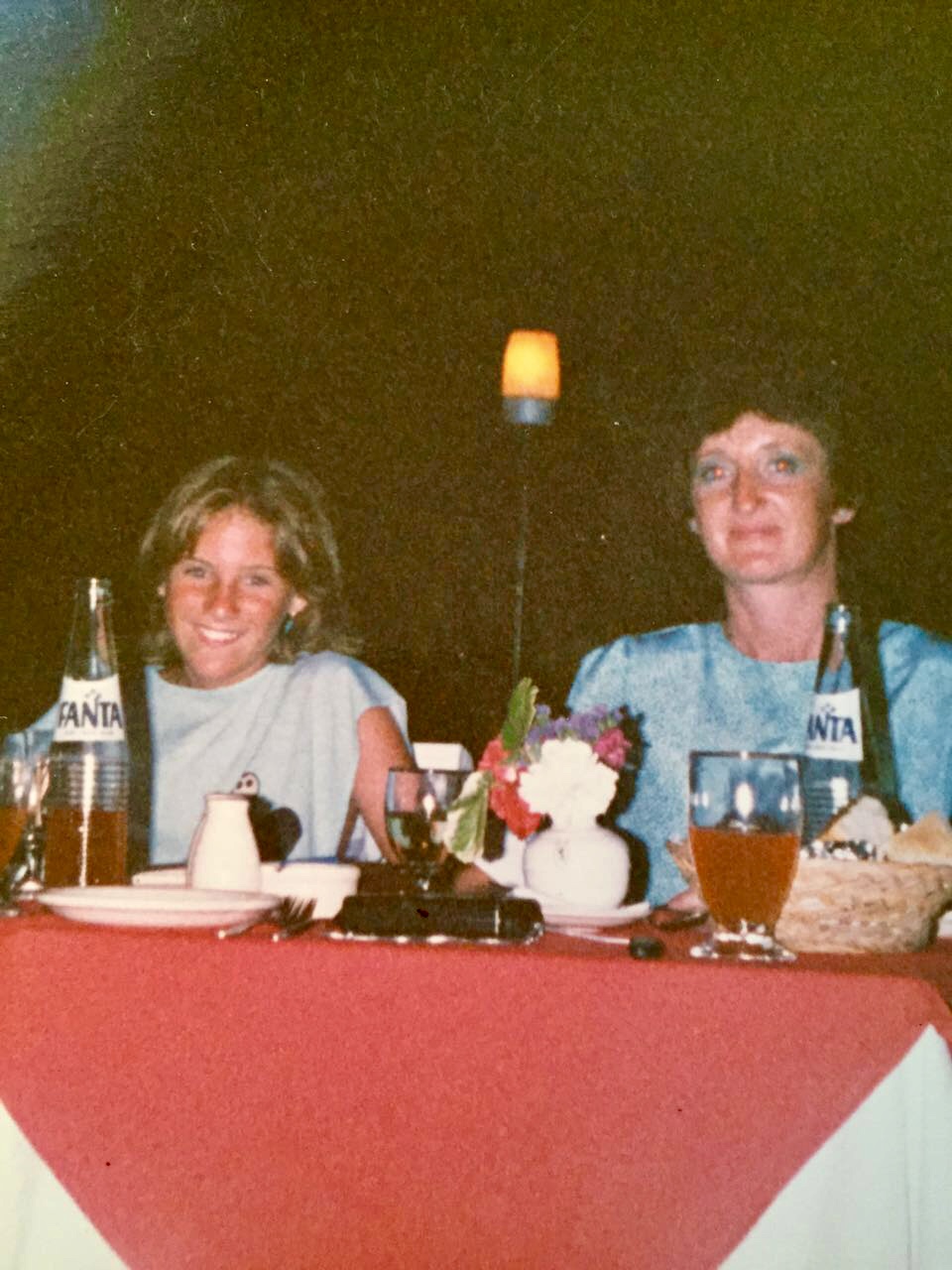
My friend, Wasma’a, recently sent me this photo from when we lived in Kenya. Wasma’a, Mum and I spent a week in Mombasa. It brings back wonderful memories enjoying the beach and sunshine. This is circa 1986 and I’m loving the shoulder pads and full on green eye shadow!
Fast forward 25+ years…
Okay- you are delivered with the diagnosis so what next? I needed a step by step guide but it doesn’t seem to exist.
In some respects you are dealing with information overload but then on the other hand I couldn’t find anything that provided me with clear direction on what I should be doing in terms of next steps. It can be overwhelming.
One thing that is important is to be open with family, friends and colleagues. You start to realise quickly how many people that you know have in some way been touched by the illness. Everyone seems to know someone who is affected and you pick up tips along the way.
The mental health experts provided me with information about Alzheimer’s which gave me a good level of understanding of the different types of dementia. It also gave me an understanding of what Mum was experiencing and how I might both emotionally and practically support her.
One problem is timeline. You don’t know from the start how long you can keep the person living independently for before more drastic action needs to be taken. It is therefore important to think long term and recognise you might have to implement a plan very quickly when the time comes.
The government care helpline provided advice on what financial benefits I could apply for, such as attendance allowance. I also found out that until the individual is at the point of requiring continuous care you are pretty much on your own financially.
As my Mum is young I needed to acknowledge that her life expectancy is much longer than the average person living with the illness so my plan needed be long term.
My Mum didn’t have a personal pension and did not have a huge amount of savings. Luckily she had a house which was mortgage free. I looked into annuities but in weighing up the options I decided against this route.
Financial costs of care is alarming and can seem overwhelming. Perhaps I should start playing the national lottery after all!!
One valuable piece of advice I received is to separate your own finances from the situation. This is difficult to do as it is only natural to want to help a loved one but you need to keep your own savings to live your own life. I did this to a certain degree, as I initially cleared my Mum’s debts and paid for the cost of her care for a few years until her illness was at a level whereby following a social services assessment the county council picked up the costs of her care.
My advice would be to take a 2 pronged approach to next steps:
1) review the financial situation and start putting a plan of action in place from reviewing savings, assets, pension, benefits, short term care fees and long term care fees such as planning for care home living.
2) assessing practical needs in the short term versus long term and the support that will be required. I’ll provide more details on the practical side in another chapter but a simple example is sticking up clear labels with instructions on how to turn on the microwave.
 Living In The Moment With Dementia