Implementing A Care Plan

DFD7DE43-2EBC-4C77-BBE7-375643FE13F1

This photo was taken on a summer holiday trip home to Ireland circa 1977 where my Mum is caring for my cousin Ciara and me. Role reversal as I find myself as primary carer for my Mum.

Initially Mum was actually capable of carrying out most day to day tasks without too much help. She was unable to drive but she knew how to take the bus into town and luckily the bus stop was at the end of her street. She could no longer cook a meal but she knew how to use the toaster and microwave for example.

Not forgetting that whilst I had repatriated from New York back to London I was still living quite a distance from my Mum – a 3 hour train ride away. Distance is therefore a key factor in terms of care planning and the support required.

One thing she couldn’t do was remember how to take her medication so I looked into a carer visiting once a day in the evening to assist with medication. Initially Mum was upset that she should have to rely on such help but after numerous phone calls to me whereby she couldn’t tell if she had taken her various medications it quickly became apparent that she couldn’t manage.

I arranged through her doctor and the local pharmacy for her medication to be home delivered every week in easy to use packs. Mum quickly adapted to the carer visits. She enjoyed the company – any excuse for a cup of tea and biscuits!

The care team kept a diary of how Mum was doing and when I visited their documentary provided me with a good account of her daily activity.

With time the care visits were increased to two visits a day. I was concerned that Mum was not eating well. As a petite size 8 she could not afford to lose any weight. The carers were able to assist in preparing lunch and dinner for her.

I had to arrange for a supermarket shop once a week with enough meals to last the week. Unfortunately this tended to be microwave meals given the care visits are fairly short so time is of the essence. The weekends I did visit I would cook up a large batch of fresh meals and would have to cello tape instructions to each of the meals for her.

In August 2015 I took Mum home to Ireland. I had noticed a decline in her condition and I wanted her to visit her home country and her family whilst she was able to cope with the travel. I recognised the trip had overwhelmed Mum. Her youngest sister, Joan, is a nurse. I asked Joan to be frank with me with regards Mums condition. Joan explained that Mum was struggling with her basic needs, for example she was relieved when Joan offered to assist her taking a shower. I valued Joan’s professional opinion who explained I needed to start focusing on Care Home living.

Following a bad fall 2 months later in which the paramedics were called, my boyfriend Clive and I had to rush down to Devon to be with my Mum. Her GP visited the next day advising she required 24 hour care and confirmed it was no longer practical for Mum to live independently – it was time to consider a permanent care plan and move her into a care home.

Those who know me well acknowledge I’m incredibly calm and laid back about life, however looking back I recognise this was a stressful time for me.

I worked remotely from Devon for a week given Mum required 24 hour supervision. The following week my Mum’s sister, Marie, and her best friend, Margaret, took it in turns to be with Mum. I used this time to view some care homes. More information to follow in a future chapter on ‘Finding A Care Home’.

I was desperately trying to arrange for Devon County Council social services to assess my Mum so that they could assist in creating a care plan for me in the interim before a space could be found in a care home. Once a case worker was assigned to Mum’s case, life became a lot easier. It was decided that Mum required 4 care visits a day. Having payed for her care up until then for over 2 years, the council confirmed that her care would be covered by them which was a huge relief as the increase in care visits would have stretched me financially. This was an interim arrangement until Mum moved to the home 5 months later.
Trying to Navigate all the Information

5A89FBDA-55B3-4D9B-B591-E60B4DDDD672

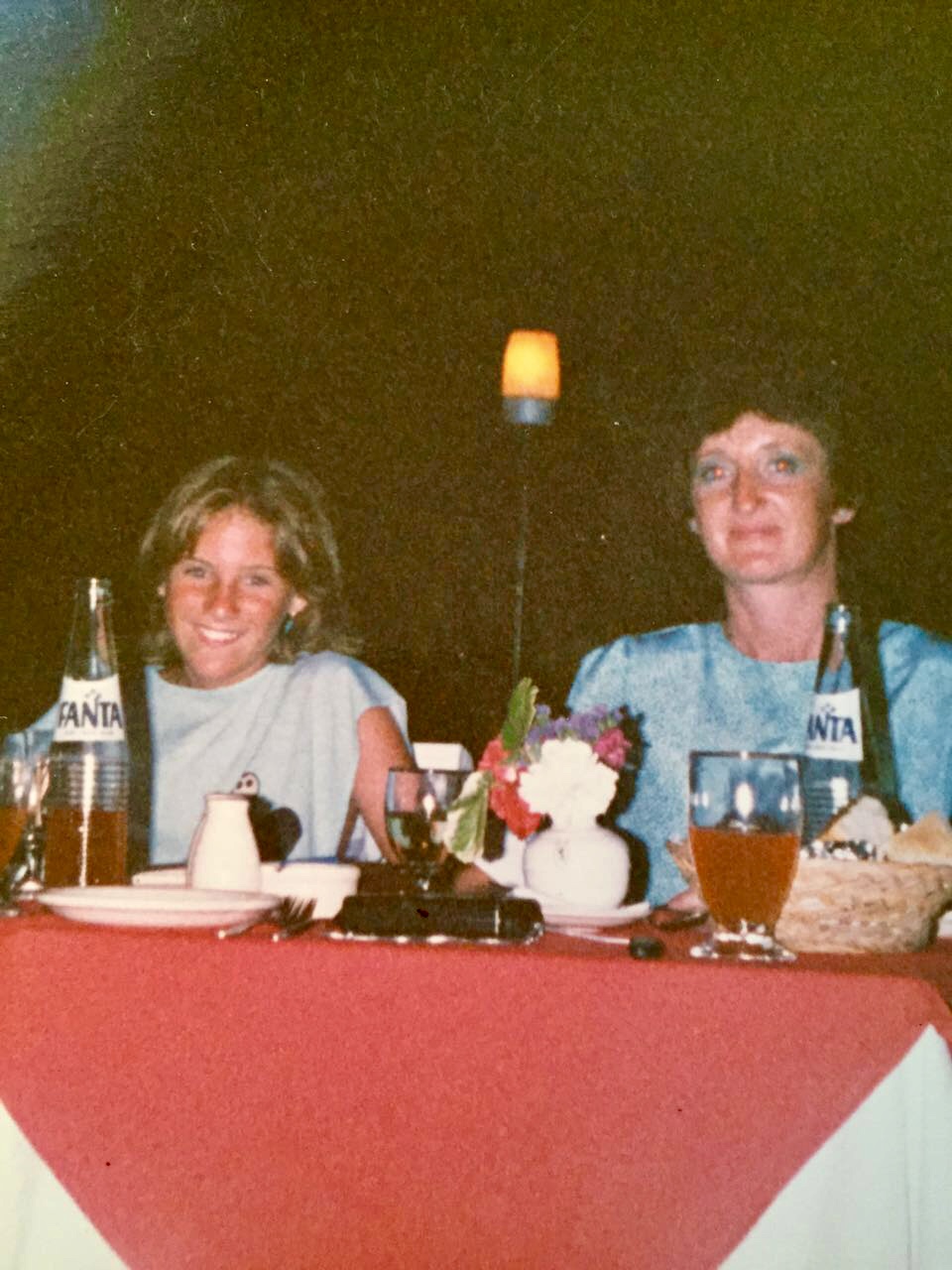
My friend, Wasma’a, recently sent me this photo from when we lived in Kenya. Wasma’a, Mum and I spent a week in Mombasa. It brings back wonderful memories enjoying the beach and sunshine. This is circa 1986 and I’m loving the shoulder pads and full on green eye shadow!

Fast forward 25+ years…

Okay- you are delivered with the diagnosis so what next? I needed a step by step guide but it doesn’t seem to exist.

In some respects you are dealing with information overload but then on the other hand I couldn’t find anything that provided me with clear direction on what I should be doing in terms of next steps. It can be overwhelming.

One thing that is important is to be open with family, friends and colleagues.  You start to realise quickly how many people that you know have in some way been touched by the illness. Everyone seems to know someone who is affected and you pick up tips along the way.

The mental health experts provided me with information about Alzheimer’s which gave me a good level of understanding of the different types of dementia. It also gave me an understanding of what Mum was experiencing and how I might both emotionally and practically support her.

One problem is timeline. You don’t know from the start how long you can keep the person living independently for before more drastic action needs to be taken. It is therefore important to think long term and recognise you might have to implement a plan very quickly when the time comes.

The government care helpline provided advice on what financial benefits I could apply for, such as attendance allowance. I also found out that until the individual is at the point of requiring continuous care you are pretty much on your own financially.

As my Mum is young I needed to acknowledge that her life expectancy is much longer than the average person living with the illness so my plan needed be long term.

My Mum didn’t have a personal pension and did not have a huge amount of savings. Luckily she had a house which was mortgage free. I looked into annuities  but in weighing up the options I decided against this route.

Financial costs of care is alarming and can seem overwhelming. Perhaps I should start playing the national lottery after all!!

One valuable piece of advice I received is to separate your own finances from the situation. This is difficult to do as it is only natural to want to help a loved one but you need to keep your own savings to live your own life. I did this to a certain degree, as I initially cleared my Mum’s debts and paid for the cost of her care for a few years until her illness was at a level whereby following a social services assessment the county council picked up the costs of her care.

My advice would be to take a 2 pronged approach to next steps:

1) review the financial situation and start putting a plan of action in place from reviewing savings, assets, pension, benefits, short term care fees and long term care fees such as planning for care home living.

2) assessing practical needs in the short term versus long term and the support that will be required. I’ll provide more details on the practical side in another chapter but a simple example is sticking up clear labels with instructions on how to turn on the microwave.


Retirement

2F61B8B2-C1E9-4F6C-B753-00131F68442D

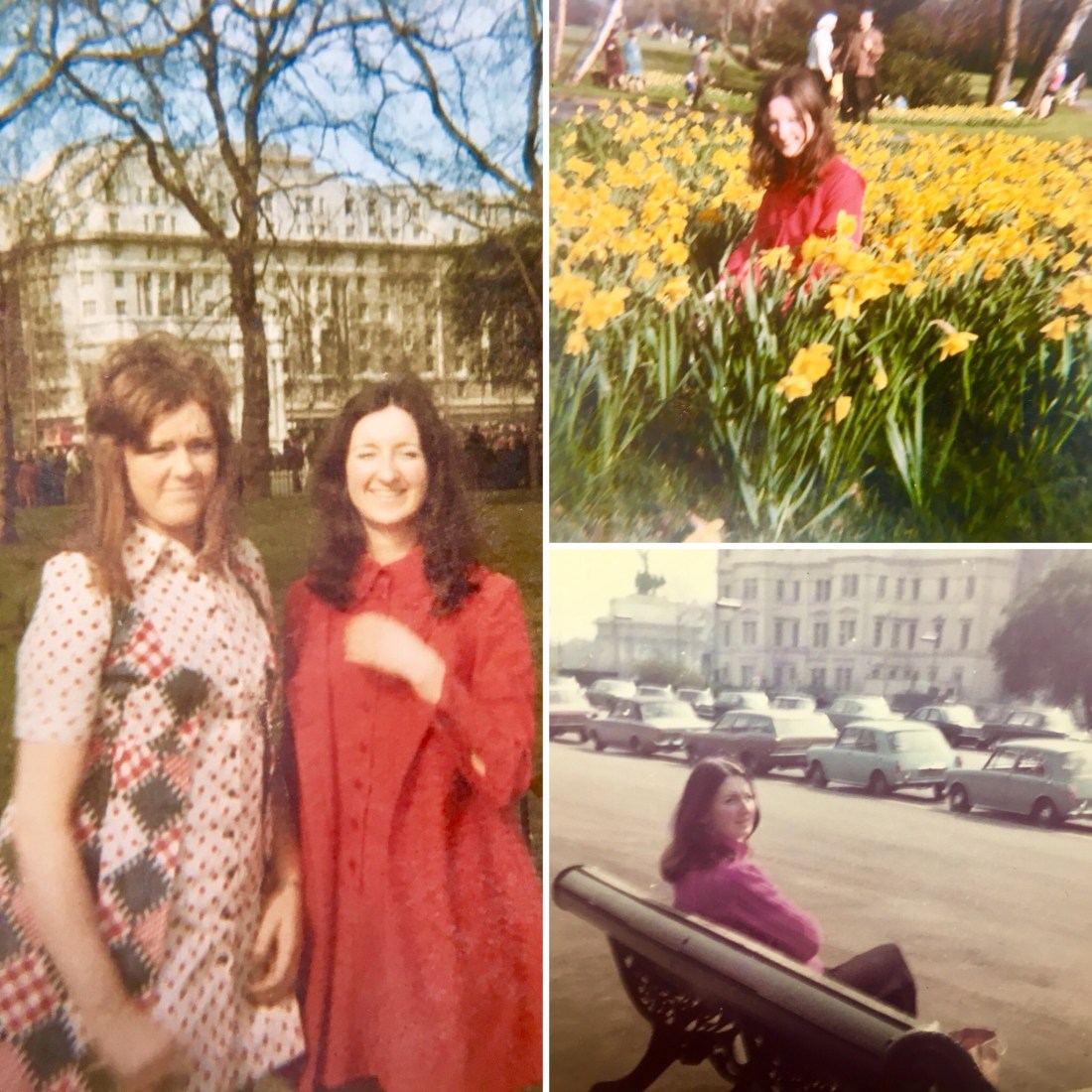
My Mum (on the right) and her good friend Pat living it up on a trip to London from Ireland when they were young and carefree. Retirement and pension clearly the last thing on their minds!

Trying to figure out the right time for Mum to retire was a bit of a balancing act. It was important to keep her mind active, for her to socialise as much as possible and for her to continue to have a purpose. At the same time we didn’t want to overwhelm her too much. It was apparent that the time had come when she was struggling to cook and use appliances. Also her timekeeping started to deteriorate. All those every day tasks which we take for granted no longer came naturally to her.

My Mum didn’t have a private or company pension. As she didn’t return to the UK until later in life her state pension didn’t add up to much but her best friend told me to look into pension credit which thank goodness she was eligible for. I think she was the last year of women eligible for the state pension aged 60. When you are dealing with this illness you have to take these silver linings where you can get them!!

When I discussed retirement with her She expressed concern she was letting people down but I got a sense of relief.

She was initially a tad confused not realising she was now a lady of leisure so a few false starts before she got the hang of it!

Training post – 4 weeks in

D387D6EE-942E-46AB-818C-1831FA525F30

So I’m over 4 weeks into my training.

I have hit all my sessions, running 4 times a week. Each week my programme includes:

1) a long run
2) an easy recovery run (now up to 5 miles)
3) a tempo run (speed session)
4) a short 3, sometimes 4 mile jog

Attached is a snap shot of a tempo run in Richmond Park, my first in 2018, aided by my New Years Eve prosecco flavoured rocket fuel!

I’m tracking over 90 miles in total so far and my long run is up to 11 miles. This week is a ‘down’ week which is good because my back is playing up.

I’m starting to get some aches and pains but this is normal in the build up to a marathon and it gives me an excuse to attend my yoga classes to stretch and flex those weary muscles… namaste!

Lasting Power Of Attorney

FBC682B3-A681-4BB4-8C9A-09B2E301FBE1.jpeg

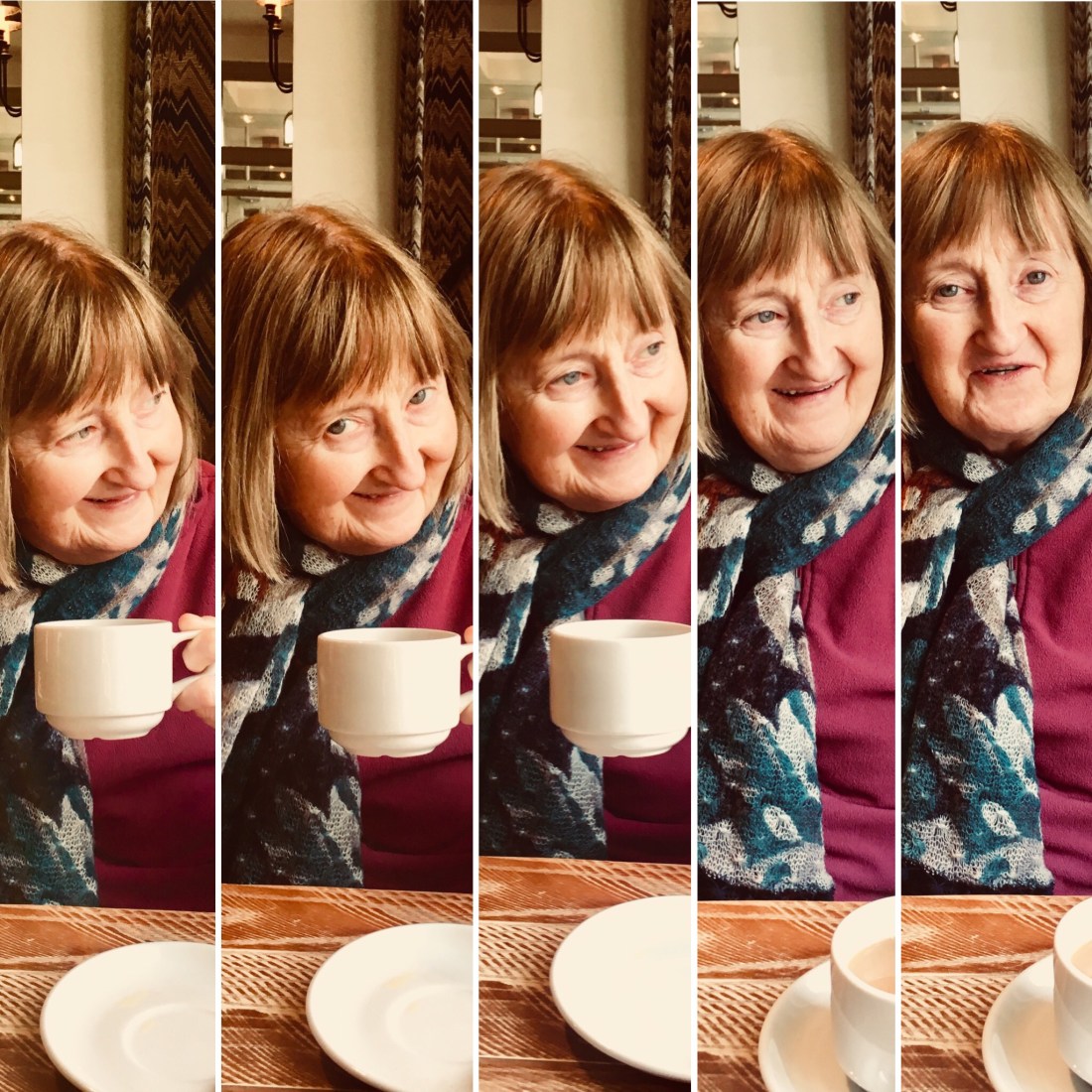
(Mum enjoying a cuppa last week).

A close family friend advised me to start looking into Power Of Attorney (POA) whilst Mum was of sound mind to agree to it. I arranged for both Health and Welfare and for Financial Affairs. At the same time Mum said she wanted to update her will.

The solicitor agreed to do home visits to make it easier. Despite reminding Mum to stay at home she of course went out and forgot her appointment! Another hurdle was Mum deciding in the 11th hour that she didn’t want to sign the documents. I remember calling from New York trying to convince her. At the time she had an issue with her telephone line which she was no longer capable of sorting out for herself. I was able to use it as an example of how POA would enable me to resolve issues on her behalf. She must have realised that a woman who could talk for Ireland and England without a phone line would not do at all. It seemed to work and she agreed to sign. I acted fast before she changed her mind.

Having POA makes life so much more manageable. I was able bring some control back to her life and in particular get on top of her finances which had got somewhat out of hand.

Diagnosis

8CCF9DCC-2379-4109-97A8-C82E227FF686

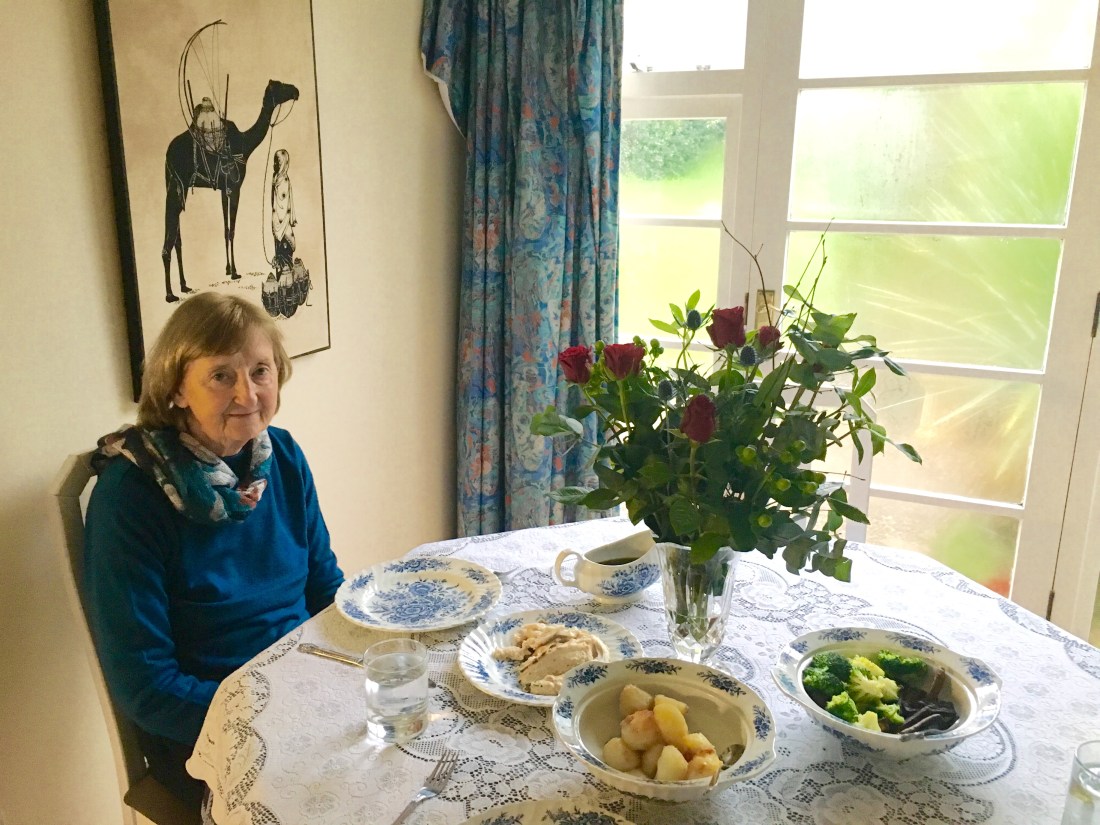
I hope you all had a lovely Christmas. This is a photo of Mum’s last Christmas living independently in December 2015.

Unfortunately it took me 4 years to get the official diagnosis for my Mums condition. In 2009 I asked her doctor to carry out the assessment in order to get her referred to the mental health specialists. I did feel guilty putting my Mum through the tests. She is by nature an incredibly anxious individual and the memory tests heightened her anxiety.

I appreciate it may have initially been difficult for others to notice her memory loss. My Mum has excellent emotional intelligence so comes across very well when interacting socially. Others put her memory problems down to anxiety and so her dosage prescription for anxiety was increased. She also suffered B12 deficiency which is common in women approaching their 60’s. The condition results in a lack of energy levels and so her memory loss was linked to tiredness. She passed the memory tests with flying colours! She was for example tested on her times tables which having been schooled by Catholic nuns meant she could recite them off by heart!

I was still convinced that there was a serious underlying memory problem and persevered. I insisted on the referral to the mental health specialists. Again Mum did well during the assessment which resulted in no diagnosis.

I was living in New York at the time and was trying my best to manage the situation from a distance. It wasn’t until family and friends started to agree with me and notice some concerning changes that I knew I was on to something. Whilst my parents were divorced, the death of my Dad really knocked my Mum for six and she went into a huge spiral decline.

I loved living in New York and having been there for over 3 years, I decided not to extend my assignment. It was time to return to the UK and start supporting Mum from the London. Easy decision!

With The decline in her condition the  doctor surgery became increasingly concerned about my Mum’s behaviour. She kept missing appointments and turning up at the surgery 3 or 4 times a day not remembering she had already visited several times that day. Her doctor called and strongly recommended another referral to specialists.

The appointment with the mental health specialists took place in July 2013. I was able to take part by meeting with the experts and provide examples of what changes I had seen in my Mum’s behaviour. She also had a brain scan which showed a decline when compared to the previous brain scan. This time Mum really struggled with the memory test which showed a decline in her short term memory. Finally the diagnosis I had been waiting for “Mixed Dementia Predominantly Alzheimer’s”. My Mum was age 65 at the time.

Training Post – The 5K’s of Christmas

20F9EBE9-2A28-411D-9CD4-5A0D46A662E6

So I have spent the last couple of months training for the 5K’s of Christmas. The event took place at Battersea Athletics track with a number of different running clubs participating. There were a lot of races scheduled and you get placed in a race based on your anticipated time. I was in the second slowest race and my number anticipated me coming last! Yikes! I was hoping to improve my PB.

I had done the 10 mile cabbage patch race in Twickenham in October and can honestly say at the time I felt the fittest I have ever been. It paid off and resulted in me achieving a time beyond my expectations.

Yes there is a ‘but’ coming…It’s amazing how quickly you can lose that fitness. A course of antibiotics didn’t help so I went into the 5K race feeling less confident.

Brrrrr it was a very chilly start on an icy track that felt banana skin slippery. My time was disappointing to say the least. I didn’t seem to be the only disappointed person there – it would seem the majority of us struggled and there was a lot of blame given to the icy track!! For me it was a combination of conditions, negative thoughts and lack of fitness.

The fast race was amazing to watch. The lead runners had been training in Kenya and it looked like that high altitude Kenyan air must have paid off as they whipped past lap after lap. A few of them were sporting some stylish Nike Kenyan jackets which made them look the part as they warmed up pre race. I was sporting the same said stylish jacket. One chap commented on my style (jacket not running form) and muddled me up with another blonde asking if I was the one who had come in first for my race. Not quite – I was the one who came in last (although I clearly remember the winner he was referring to overtaking me with 3 laps still to go). Jacket and speed clearly not connected! I had to explain that I grew up in Kenya hence my love for the jacket. Sadly none of that Kenyan running magic has rubbed off on me!

Now that the 5K is out of the way I have officially embarked on my marathon training this week. My training plan is in place thanks to coach Clivey! He suggests I start off with a long run of 10 miles. Hang on a second what is the rush to get my mileage up? So we agree to 8 miles which he reminds me is one loop (and a bit more) of Richmond Park which I do all the time.

So here is to the dreaded long runs, trying to get that October fitness back. As soon as mince pie and mulled wine season is out the way I really must knuckle down!


The Signs

I can’t pinpoint when I first thought my Mum had a memory problem. There were a number of signs which presented themselves over a period of time. A lot of people who are concerned about their loved ones often ask me when and how I came to the realisation that my Mum had a problem. Trying to distinguish the difference between memory loss as a result of old age creeping up on us versus dementia or Alzheimer’s. Below are some examples of things to look out for but what I will highlight is that you know your loved one better than anyone and with time the signals will become very apparent as you notice the individual no longer coping with every day life as well as they used to. There is a lot to be said about your gut instinct.

One of my earliest memories was when Mum (aged approx 60 – about 5 years before her diagnosis) asked me to teach her to text using her mobile phone. I spent a whole afternoon trying to explain and guide her through the concept to no avail. I appreciate her generation do struggle with technology but we got absolutely nowhere and with hindsight it was not a generation issue it was clearly her memory being unable to grasp the task.

I noticed my Mum was no longer able to cope with her finances the way she used to. It’s got to be said she was never great in this department but bills were never paid and she started receiving late payment notices.

She would forget to return to her car in order to top up the parking metre and get fined £50 as a result. Now this could happen to any of us, however with the sting of a £50 fine you would ensure it never happened again. Mum kept letting it happen and the fines mounted up!

When she turned 60 she was able to travel on the bus for free however completion of the simple application form was too difficult without my assistance.

She got lost driving from the train station back home – this was a regular journey and she could not figure out how to get back on track without my guidance.

She was unable to follow simple instructions when for example doing telephone banking.

She kept forgetting her PIN number.

She neglected hair, dental and doctor appointments.

She would constantly repeat herself or ask the same questions over and over again.

She suddenly became overwhelmed at work. Simple routine tasks became a struggle to cope with.

After diagnosis the signs become even more apparent but I’ll save that for another chapter!

Introduction

If you asked my Mum how old she will be on her next birthday she wouldn’t be able to tell you. This is because she is suffering from early on set mixed dementia predominantly Alzheimer’s. She will be 70! In the lead up to the big 7-0 I decided to do something rewarding by contributing towards the fight against this illness. I am going to run the London Marathon 2018 (which is a week before her birthday) and raise as much money as I can for Alzheimer’s Research UK.

http://uk.virginmoneygiving.com/SharonWilson12

In parallel I want to start writing a blog to showcase that whilst this is a very sad illness to watch and can be associated with aggressive and frustrated behaviour, there are cases like my Mum who is such a gentle soul, whereby we really enjoy living in the moment even if she has forgotten about it less than five minutes later!

My Mum is Irish and lived in Ireland until she met and married my Dad. She has a brother and 2 sisters all living in Ireland. My Mum moved to Africa with my Dad starting in Zambia (where I was born) before moving to Kenya and then on to Egypt before returning to the UK 18 years later.

My Mum is very much living in her childhood. Her world has significantly shrunk and whilst she does recognise me most of the time, she doesn’t understand how we are related often mistaking me as her sister rather than her daughter.

It’s hard to think it can be possible for this capable women who used to travel around the world adapting to different cultures, now unable to dress herself or remember what was said only a minute ago.

That said my Mum has always had such a great sense of humour and really enjoys a giggle. This is a character trait which remains and if anything has been accentuated more with the illness, so we do spend much of our time having a laugh, enjoying and living in the moment.

With the introductions out of the way I hope this blog will help those who are supporting loved one’s suffering from the illness, or at the very least create some awareness given so many people suffer from it and give us food for thought about preparing for our own old age until a cure can be found.

I plan to keep you updated on my journey with my Mum’s illness and also with my 26.2 mile journey to the finish line on 22 April!!